Historical frontier Western
Research-driven stories recreate a specific territory, migration, conflict, industry, or settlement without reducing the past to scenery.
Complimentary manuscript consultationConfidentiality guaranteed

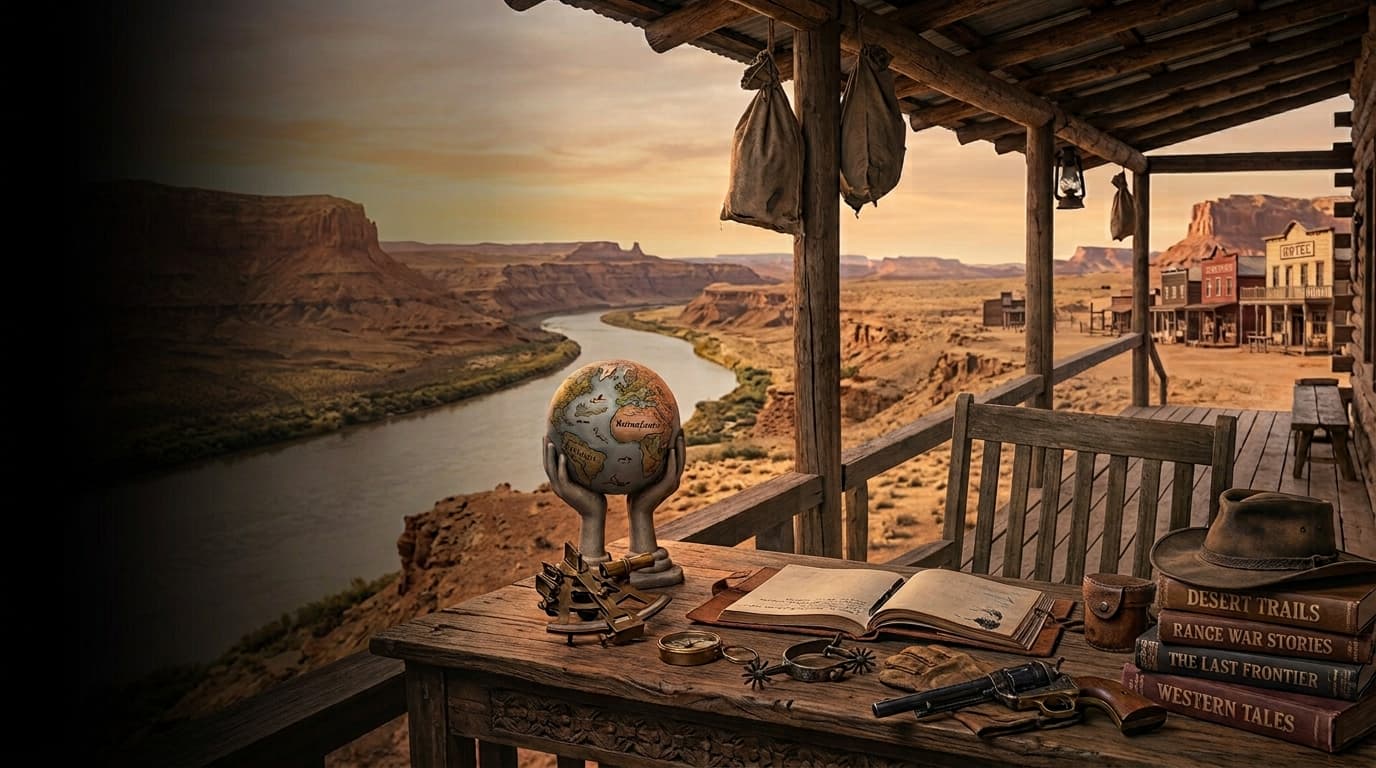
Western fiction ghostwriting
Write a novel of vast landscapes, hard choices, frontier communities, and characters forced to decide what justice means when the law is far away.
Develop your WesternResearch-grounded frontier worlds
Cinematic action and moral stakes
Complete manuscript ownership
Qualified Western book writers
The West is more than a backdrop. It is distance, scarcity, opportunity, contested history, and the question of who gets to define the future.
A compelling Western balances research with narrative force. The characters must belong to a specific territory and time, while their conflicts over survival, loyalty, land, freedom, and justice remain immediately human.
Our writers build your concept into an immersive manuscript with vivid landscape, purposeful action, credible detail, and characters who stand beyond familiar archetypes.
Tell us where the trail beginsBeyond one frontier myth
The genre can celebrate adventure, interrogate history, follow intimate communities, or carry its moral codes into the present.
Research-driven stories recreate a specific territory, migration, conflict, industry, or settlement without reducing the past to scenery.
Familiar myths are questioned through complex viewpoints, moral ambiguity, environmental cost, and lives omitted from older versions of the frontier.
The Western’s landscapes, codes, and conflicts can power modern crime, romance, mystery, adventure, or speculative stories.
From territory to final manuscript
Landscape, history, material detail, character, action, and moral consequence develop together.
We define the location, time, central dispute, community, protagonist, historical boundaries, and the version of the West your novel will examine.
The outline integrates routes, settlements, work, law, technology, culture, environmental limits, character arcs, and escalating moral choices.
The writer balances atmospheric landscape, distinctive dialogue, intimate character, and readable action. Reviews keep history, pace, and voice aligned.
Editing checks chronology, geography, travel time, material culture, community representation, action logic, motivation, and the emotional payoff of the final choice.
A frontier readers can believe
Your proposal defines research, locations, period, concept development, structural planning, milestone drafts, revisions, and historical or cultural review before work begins.
Request a tailored scopeFrequently asked questions
Answers about Western forms, historical research, representation, action, schedules, creative control, and ownership.
We support historical frontier novels, cattle and trail stories, outlaw and lawman narratives, homestead fiction, revisionist and literary Westerns, Western romance, contemporary neo-Westerns, and genre hybrids.
The research plan can cover maps, newspapers, archives, material culture, Indigenous and local histories, transportation, work, weapons, law, language, and the environmental realities of the chosen place.
Yes. A revisionist approach examines whose story is being told, uses specific historical sources, and develops Indigenous, Mexican, Black, immigrant, and women characters as full participants in the world.
Action is built around geography, visibility, distance, available technology, character skill, fear, and consequence. Clear cause and effect matters more than exaggerated spectacle.
Most full-length Westerns take 5 to 8 months, depending on historical research, word count, number of locations, structural complexity, revisions, and specialist review.
Yes. You approve the direction and milestone drafts. The completed manuscript and agreed rights transfer under the work-for-hire terms in your contract.
Every trail ends with a reckoning
Bring the territory, conflict, community, or hard choice at the heart of your novel.
Begin your Western novel
An experienced screenwriter and fiction ghostwriter who brings practical production insight to cinematic, character-led stories.

A thoughtful writer with a strong command of language, emotional nuance, and the details that make a fictional world feel lived in.

An accomplished writer whose background spans education, narrative development, and content production across multiple genres.